
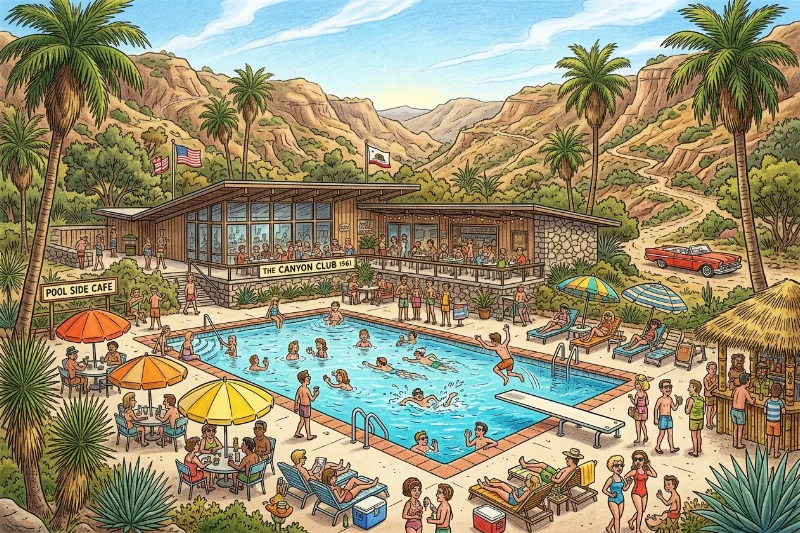
The Glen Eden Sun Club stands as a beacon of social nudism in Southern California, boasting a rich history that spans over six decades. Since its inception, the club has evolved from a modest gathering of like-minded individuals into one of the most recognized family nudist resorts in the world. Its journey is a testament to the enduring human desire for body positivity, community, and a return to nature.
Founded in 1963, Glen Eden was born during a period of significant cultural transition in the United States. While the broader nudist movement had been established decades earlier, the specific vision for Glen Eden was to create a permanent, member-owned sanctuary. This foundational principle ensured that the club would remain a democratic institution, governed by those who cherished its mission the most.
The Journey to Corona
In its earliest days, the club’s pioneers searched for a location that offered both privacy and natural beauty. They eventually secured land in the Temescal Canyon area of Corona, California. This rugged terrain provided the perfect backdrop for a secluded retreat, though it required immense labor and dedication from the original members to transform the wild landscape into a habitable resort.
The move to Corona was a defining moment for the club, as it allowed for the establishment of permanent infrastructure. Early members lived in primitive conditions, often camping in tents while they cleared brush and laid the groundwork for what would become a sophisticated facility. Their collective effort fostered a deep sense of camaraderie that remains a hallmark of the Glen Eden experience today.
Establishing the Infrastructure
As the club grew, so did its amenities. One of the most significant early milestones was the construction of the Olympic-sized swimming pool, which quickly became the heart of the community. This project was a massive undertaking for a member-run organization, requiring not only financial investment but also the technical expertise and manual labor of the membership base.
Following the success of the pool, the club began developing designated lots for mobile homes and RVs. This allowed members to establish secondary residences on the property, turning Glen Eden into a true year-round community. The transition from a weekend campground to a residential resort solidified its status as a premier destination for those committed to the nudist lifestyle.
Cultural and Philosophical Growth
Throughout the 1970s and 1980s, Glen Eden became a focal point for the “wholesome family nudism” philosophy. This approach emphasized that nudity was a natural and healthy state for people of all ages, fostering an environment where families could bond without the pressures of societal beauty standards. This philosophy helped demystify nudism for the general public.
Glen Eden also played a pivotal role in the larger nudist movement through its affiliation with the American Association for Nude Recreation (AANR). By hosting regional and national conventions, the club helped shape the policies and public relations strategies of the nudist community. It became a model for how a large-scale nudist resort could operate professionally while maintaining its core values.
Overcoming External Challenges
Like many nudist organizations, Glen Eden faced its share of external challenges, particularly regarding public perception and local zoning regulations. In the mid-20th century, social nudity was often misunderstood and met with skepticism by local authorities. The club’s leadership worked tirelessly to maintain positive relationships with the Corona community and Riverside County officials.
Legal battles over land use and property rights were not uncommon, but the club’s organized structure and dedicated legal defense ensured its survival. These challenges only served to strengthen the resolve of the membership, proving that the club was more than just a recreational site; it was a community worth defending against social stigma.
As the digital age approached, Glen Eden modernized its operations and outreach. The club embraced new technology to streamline management and connect with a younger generation of nudists. This modernization was crucial in ensuring that the club remained relevant in a rapidly changing world, all while preserving the tranquil atmosphere that members had come to expect.
A Lasting Legacy in Southern California
Today, Glen Eden Sun Club is renowned for its commitment to nature and conservation. The resort spans over 200 acres of meticulously maintained grounds, featuring hiking trails, sports courts, and lush landscaping. The club’s dedication to preserving the natural beauty of Temescal Canyon has made it a sanctuary not just for people, but for local wildlife as well.
The demographics of the membership have also evolved, reflecting a more diverse and inclusive community. While the founding members were primarily focused on creating a private escape, today’s members come from all walks of life, united by a shared belief in body acceptance and social freedom. This diversity has enriched the social fabric of the club, making it a vibrant and welcoming place for newcomers.
In conclusion, the history of the Glen Eden Sun Club is a story of vision, resilience, and community. From its humble beginnings in 1963 to its current status as a world-class resort, it has remained steadfast in its mission to provide a safe and beautiful environment for social nudism. As it looks toward the future, Glen Eden continues to inspire individuals to embrace their natural selves in a supportive and scenic setting.