
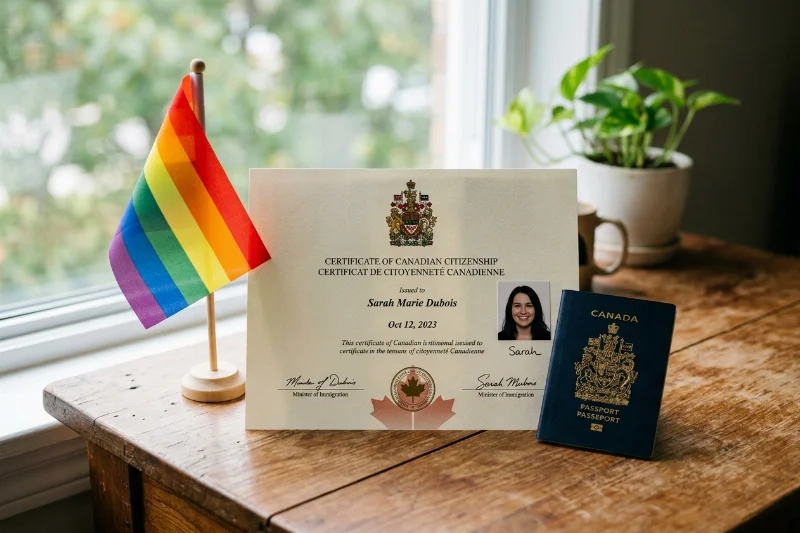
In a significant administrative development, Immigration, Refugees and Citizenship Canada (IRCC) has begun prioritizing the processing of citizenship certificates for members of the LGBTQ+ community from the United States. This shift comes as a direct response to a surge in inquiries from American citizens who possess Canadian lineage and are seeking to solidify their legal status in Canada amidst a changing political and social landscape in their home country.
While Canadian citizenship law has long provided a pathway for those born abroad to Canadian parents, the speed at which these applications are currently being handled marks a departure from standard processing times. Government officials have noted that the urgency is often tied to safety concerns and the desire for a secondary legal refuge, particularly for those residing in states where legislative changes have impacted the rights of gay and transgender individuals.
The Shift in Canadian Immigration Priority
The decision to expedite these certificates is not an official change in legislation but rather an exercise of administrative discretion. Under the Citizenship Act, the Minister has the authority to grant or accelerate certain processes in cases of special necessity. For many gay Americans, the ability to obtain a citizenship certificate is the final hurdle in securing a Canadian passport and establishing a dual-residency status that offers a safety net.
Drivers of the American Migration Interest
Political analysts point toward a series of state-level legislative actions in the U.S. as the primary catalyst for this trend. Over the past twenty-four months, numerous bills targeting LGBTQ+ healthcare, education, and public expression have passed in various jurisdictions. This has created a sense of precariousness for many families who previously viewed their legal protections as permanent, leading them to explore the ‘First Generation Limit’ rules of Canadian citizenship.
Legal experts specializing in cross-border migration have reported a 40% increase in consultations regarding Canadian citizenship by descent since early 2023. This demographic often consists of professionals and skilled workers who already have a cultural and familial connection to Canada, making them ideal candidates for a rapid transition if the need arises.
Criteria for the Expedited Process
To qualify for the expedited processing of a citizenship certificate, applicants must demonstrate a clear and present need for urgency. This can include evidence of professional relocation requirements, healthcare access needs, or documentation of legal vulnerabilities in their current place of residence. IRCC agents are reportedly weighing these humanitarian factors more heavily than in previous years, acknowledging the unique risks faced by the queer community.
Furthermore, applicants must still meet the rigorous evidentiary standards of proof of parentage. The process requires original birth certificates and evidence that at least one parent was a Canadian citizen at the time of the applicant’s birth. While the paperwork remains extensive, the timeline from submission to issuance has, in some documented cases, been reduced from eighteen months to less than ninety days.
Navigating the Legal Landscape of Dual Citizenship
Securing a Canadian citizenship certificate is only the first step in a complex legal journey. For many Americans, maintaining dual citizenship involves navigating intricate tax laws and disclosure requirements. However, the peace of mind offered by a Canadian document often outweighs the bureaucratic hurdles, especially for those worried about the potential for future federal restrictions on travel or identification markers in the United States.
Legal Support and Community Advocacy
Advocacy groups on both sides of the border have stepped up to provide resources for those navigating this process. Organizations such as Rainbow Railroad, while primarily focused on high-risk refugees from hostile nations, have seen a shift in their inbox traffic toward North American inquiries. They emphasize that while the U.S. is not a ‘danger zone’ in the traditional sense, the erosion of rights is a legitimate cause for seeking protective status elsewhere.
Canadian immigration lawyers are also adapting, creating specialized departments to handle ‘Citizenship by Descent’ for LGBTQ+ clients. These departments focus on ensuring that all humanitarian arguments are clearly articulated to IRCC, maximizing the chances that an application is flagged for priority review by an officer.
The Broader Impact on Canada-U.S. Relations
This administrative trend highlights a subtle but distinct divergence in the social policies of the two neighboring nations. As Canada doubles down on its reputation as a sanctuary for human rights, the influx of skilled, often wealthy American citizens could have long-term economic benefits. It also reinforces the ‘Maple Leaf’ brand as a global leader in inclusivity and diversity, attracting talent that feels sidelined in the current American climate.
Critics, however, warn that an influx of new residents—even those with citizenship rights—could place additional strain on Canada’s already burdened housing market and healthcare system. The government must balance its humanitarian commitments with its capacity to integrate new arrivals effectively, ensuring that the expedited process remains a tool for those in genuine need rather than a bypass for general migration.
As the 2024 U.S. election cycle approaches, officials expect the number of applications to remain high. The expedited processing of citizenship certificates serves as a barometer for the anxiety felt by many, and Canada’s willingness to facilitate this transition marks a pivotal moment in the history of North American migration.
Ultimately, the movement represents a search for certainty in an era of volatility. For the gay Americans now holding their Canadian citizenship certificates, the document is more than just paper; it is a promise of security and a validation of their right to live authentically without fear of legislative reversal.