
The landscape of adult content creation has undergone a seismic shift, moving from high-budget studio sets to the intimate quarters of private residences. This digital revolution was sparked by the ubiquity of high-definition cameras in our pockets, democratizing the industry for millions. As more creators enter the field, the standard for visual quality has skyrocketed, leading to a debate over whether a smartphone is truly sufficient. In this journalistic analysis, we examine whether modern mobile technology can match the output of dedicated professional hardware.
Today’s flagship smartphones are marvels of engineering, boasting 4K resolution and sophisticated image processing software that can outperform the camcorders of a decade ago. These devices are optimized for social media consumption, where the vast majority of adult content is now viewed. However, resolution is only one piece of the production puzzle. For many creators, the initial appeal of the smartphone is its convenience and the ability to upload content directly to the web without complex transfers.
The Power of the Modern Smartphone Studio
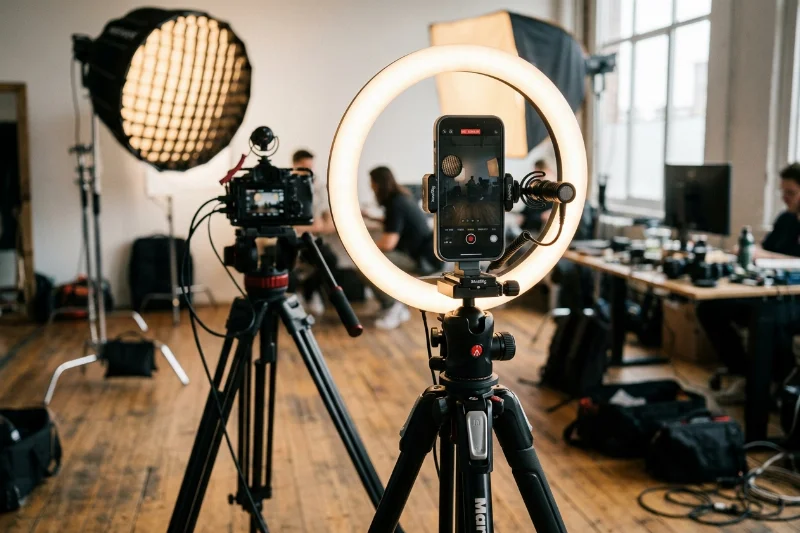
To make a smartphone look professional, one must look beyond the lens and focus on the surrounding environment. The primary differentiator between amateur and high-end mobile content is often the level of environmental control. Lighting remains the most significant factor in video quality; even the most expensive smartphone sensor will produce grainy footage in a dimly lit room. Professionals using mobile devices often invest in multiple LED panels to simulate the three-point lighting used in traditional cinema.
The Audio Imperative
Data analysis of viewer retention reveals a surprising trend: audio quality often ranks higher than video clarity in maintaining an audience. Smartphone microphones are omnidirectional and prone to capturing ambient room noise or distracting echo. To bridge this gap, successful creators are increasingly utilizing external Bluetooth or lightning-port microphones. High-fidelity audio provides an immersive experience that separates top-tier performers from those just starting out.
Ensuring Visual Stability
Stability is the third pillar of a professional mobile setup. Shaky, handheld footage can distract from the performance and suggest a lack of technical care. High-quality tripods and motorized gimbals have become standard tools for mobile creators. These devices allow for cinematic pans and steady shots that mimic the work of a professional camera operator, adding a layer of polish that builds brand authority.
When a Smartphone Reaches Its Limit
Despite these advancements, there are physical limits to what a smartphone can achieve. The sensor size is the most glaring hurdle; a phone sensor is roughly a fraction of the size of a full-frame mirrorless sensor. This limitation directly affects the dynamic range, or the ability to capture detail in both the brightest highlights and the darkest shadows. In high-contrast settings, a smartphone may blow out details that a professional camera would preserve effortlessly.
Furthermore, smartphones struggle with the physical phenomenon of heat during high-bitrate recording. Recording 4K video generates substantial internal heat, often leading to performance throttling or unexpected device shutdowns in the middle of a shoot. For creators producing long-form content, these logistical hurdles can become a significant bottleneck in their production schedule.
Battery life is another limiting factor that dedicated cameras manage more effectively. While a smartphone must balance its battery between background apps, cellular signal, and the camera, a dedicated camera is a single-purpose tool. Professional gear allows for dummy batteries or external power supplies that ensure the camera stays running for hours without the risk of overheating or power loss.
Storage management remains a constant headache for mobile-only creators. Modern high-definition video files are massive, and the lack of expandable storage in many flagship devices means creators must constantly delete old footage. A professional camera setup utilizing high-speed SD cards allows for a faster workflow, enabling the creator to swap storage in seconds rather than waiting for cloud uploads.
The Advantage of Professional Hardware
Stepping up to a mirrorless camera system introduces the world of interchangeable lenses. These lenses allow creators to achieve a genuine bokeh effect, where the background is naturally blurred. While smartphones attempt to mimic this via software, it often results in artificial edges. A dedicated lens provides an organic, high-end aesthetic that signals a serious investment in the creator’s craft.
Low-light performance is where professional gear truly shines. In the adult industry, where lighting setups are sometimes unconventional or atmospheric, the ability of a large sensor to capture clean images without digital noise is invaluable. This technical edge allows creators to experiment with different moods and settings that a smartphone simply could not handle with clarity.
Software and Post-Production Workflow
Regardless of the hardware used, the final look of the content is often determined in the editing suite. Mobile apps are excellent for quick edits, but they lack the granular control of desktop software like Adobe Premiere or DaVinci Resolve. Professional creators use these tools for advanced color grading, ensuring that their skin tones look natural and their brand has a consistent visual identity.
Efficiency in editing is another reason veterans move away from smartphones. Handling 4K files on a desktop with a dedicated graphics card is significantly faster than editing on a mobile processor. This time saved in post-production allows the creator to focus more on marketing and engaging with their audience, which is the cornerstone of any successful adult content business.
In conclusion, the necessity of professional gear is largely determined by the creator’s current career stage. For those launching their first channel, a modern smartphone equipped with proper lighting and audio tools is more than sufficient. However, as the brand scales and viewer expectations grow, the transition to professional hardware becomes an investment in longevity. The most successful creators are those who recognize that while the camera starts the conversation, it is the production value that keeps the audience coming back.