
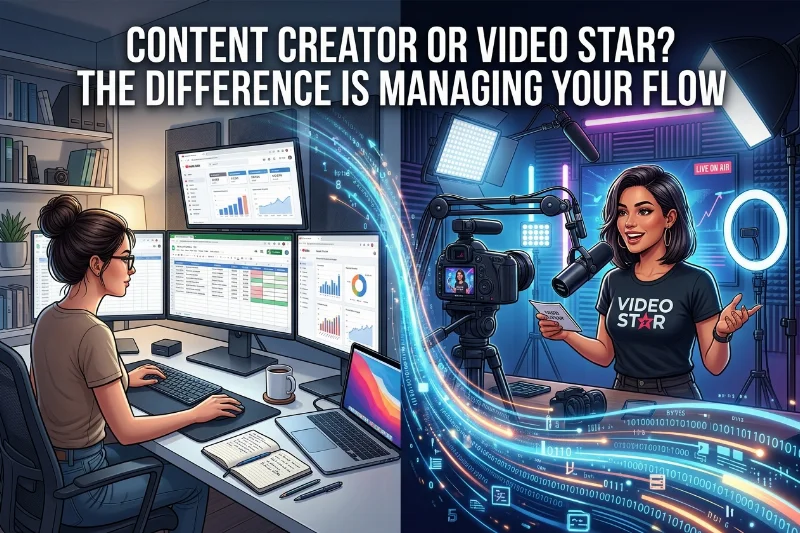
In the rapidly evolving landscape of digital media, the terms “Content Creator” and “Video Star” are often used interchangeably, yet they represent two fundamentally different approaches to the craft. While one relies on the brilliance of the moment, the other relies on the resilience of a system. Navigating the path between these two identities is not just a matter of aesthetic choice; it is a strategic decision that determines whether your career is a short-lived flash in the pan or a sustainable, long-term business. The differentiator is rarely talent, but rather how you manage your internal and external flow.
Defining the Architect: What is a Content Creator?
A true content creator operates like an architect. They are focused on the structural integrity of their brand across multiple platforms and mediums. For the creator, a video is not just a performance; it is a single asset within a larger ecosystem designed to provide value, education, or entertainment. They spend as much time analyzing metadata and distribution channels as they do in front of the lens, ensuring that every piece of content serves a specific objective in their business funnel.
This role requires a high degree of strategic thinking. Creators understand that their presence is a product, but they also recognize that the product needs a reliable delivery system. They prioritize multi-format distribution—turning a single video into a newsletter, a series of social clips, and a blog post. By focusing on the “how” and “why” behind the content, creators build an audience that is loyal to their perspective and expertise, rather than just their personality.
The Performer’s Spark: What is a Video Star?
Conversely, the video star is the ultimate performer. Their primary currency is charisma, and their success is often measured by the immediate emotional resonance they have with their audience. A video star thrives on trends, high-energy editing, and the ‘it’ factor that makes a viewer stop scrolling. Their flow is often dictated by the algorithm’s current mood, requiring them to stay hyper-relevant and visually engaging at all times to maintain their momentum.
The challenge for the video star is the volatility of that momentum. Because their brand is so tightly coupled with their physical presence and personality, the pressure to perform can be immense. Without a backend system to manage the workload, the video star often finds themselves on a treadmill of constant production, where a single week of downtime can result in a significant drop in visibility and engagement.
The Engine Room: Managing Your Creative Flow
The bridge between being a flickering star and a consistent creator is the management of flow. This isn’t just about a checklist; it’s about understanding the rhythm of your creative energy. Flow management involves segmenting your time so that your ‘star’ moments (recording, performing) are fueled by your ‘creator’ moments (planning, researching, and optimizing). When these two forces are in sync, you create a flywheel effect that generates content without depleting your mental reserves.
Systematizing Inspiration
Effective flow management means you don’t wait for inspiration to strike before you hit record. Instead, you build a “second brain” where ideas are captured, categorized, and matured. By systematizing inspiration, you ensure that the creative process is decoupled from your daily mood. This allows you to show up as the ‘video star’ on camera because the heavy lifting of the ‘content creator’ was already completed during the planning phase.
This systemic approach also guards against the most common pitfall in the industry: burnout. When you have a backlog of ideas and a structured production schedule, the anxiety of the “blank page” disappears. You are no longer reacting to the digital landscape; you are proactively shaping your place within it by following a roadmap that respects your capacity.
Scaling Beyond the Face
Another critical aspect of flow management is the ability to delegate and automate. A content creator looks for ways to remove themselves from the technical bottlenecks, such as basic editing or social media scheduling. By protecting their time, they ensure that their energy is reserved for high-impact activities. A video star who fails to transition into this creator mindset will eventually hit a ceiling where they simply cannot work any harder to achieve more growth.
Automation isn’t about losing the human touch; it’s about amplifying it. Using tools to manage the administrative flow of a channel allows you to focus on the storytelling that only you can do. This distinction between ‘working in’ the business and ‘working on’ the business is what separates those who fade away from those who become household names in their niche.
Finding the Balance for Longevity
Ultimately, the most successful individuals in the modern economy are those who can master both roles. They are video stars when the red light is on, bringing the energy and connection that audiences crave, but they are content creators in the shadows, building the systems and managing the flow that keep the lights on. They understand that while the star attracts the crowd, the creator builds the stadium.
To find your own balance, start by auditing your current workflow. Are you spending all your time reacting to the latest trend, or are you building a library of evergreen value? By shifting your focus toward flow management, you can transform from a performer who is exhausted by the algorithm into a creator who is empowered by it. The difference is not in the camera you use, but in the systems you build behind it.