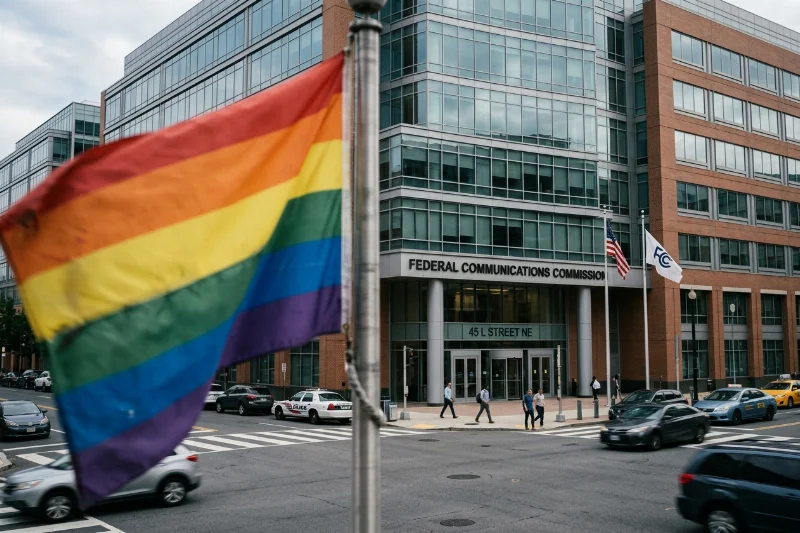
National Coalition Opposes FCC ‘Warning Label’ Proposal for LGBTQ Content
HOTi Linker
May 27, 2026
In a unified stand against what they describe as government-mandated discrimination, a coalition of more than 40 civil rights and advocacy organizations has filed a formal opposition to a proposed Federal Communications Commission (FCC) initiative. The proposal, which suggests the implementation of specific “warning labels” or enhanced rating disclosures for programming featuring LGBTQ+ themes, has sparked a national debate over the limits of regulatory oversight and the protection of inclusive media representation.Leading the charge are GLAAD, the Human Rights Campaign (HRC), and PFLAG National, alongside a diverse array of legal experts and media watchdog groups. These organizations argue that the FCC’s move to single out LGBTQ+ content for special labeling is not only a relic of outdated prejudices but also a direct violation of the constitutional principles that govern free expression in the United States.The controversy stems from a series of petitions and regulatory suggestions aimed at providing parents with more “granular control” over broadcast and streaming content. However, the coalition maintains that by specifically targeting LGBTQ+ identities for such labels, the FCC would be effectively categorizing these lived experiences as inherently “adult” or “sensitive,” regardless of the actual context or age-appropriateness of the material.
The Case Against Content Labeling
Advocates emphasize that the introduction of such labels would create a chilling effect on creators and broadcasters alike. By marking LGBTQ+ stories with a figurative “scarlet letter,” the commission would likely discourage advertisers and production houses from investing in inclusive narratives, fearing that a government-sanctioned warning would deter audiences or invite further regulatory scrutiny.Furthermore, the coalition highlights the potential psychological impact on LGBTQ+ youth and families. “To suggest that a family with two fathers or a story about a transgender teenager requires a ‘warning’ is to tell an entire community that their lives are something to be feared or hidden,” a joint statement from the groups read. They argue this policy would further marginalize a community already facing significant legislative challenges across the country.
Censorship and the First Amendment
Legal analysts within the coalition point out that the FCC’s proposal treads on dangerous legal ground. Under the First Amendment, content-based regulations are subject to strict scrutiny, the highest level of judicial review. The coalition argues that the government has failed to provide a compelling interest that would justify the discriminatory application of labeling specifically toward LGBTQ+ characters and storylines.This push for labels is seen as a departure from the existing industry-standard TV Parental Guidelines, which have functioned for decades without targeting specific protected classes. The coalition asserts that the current system already provides parents with the tools necessary to make informed decisions without the need for government-mandated bias in how those tools are applied.GLAAD’s leadership has been particularly vocal, noting that media representation has played a pivotal role in the increasing social acceptance of LGBTQ+ individuals. They suggest that the FCC’s proposal is a reactionary attempt to roll back decades of progress in media visibility, potentially returning broadcasting to an era where LGBTQ+ identities were relegated to the shadows or depicted only through a lens of controversy.
Political and Cultural Implications
The timing of the FCC’s consideration of these labels coincides with a broader wave of state-level legislation targeting LGBTQ+ rights. From school book bans to restrictions on gender-affirming care, the coalition views the federal agency’s proposal as part of a coordinated effort to erase LGBTQ+ presence from the public square, extending now into the very media that serves as a mirror to society.Media scholars argue that visibility in programming is a matter of public interest, a core tenet of the FCC’s original mandate. By restricting or stigmatizing that visibility, the agency would be acting contrary to its duty to ensure that the airwaves reflect the diversity of the American people. This argument forms the backbone of the coalition’s demand for the proposal to be dismissed immediately.
The Future of Inclusive Broadcasting
As the public comment period continues, the FCC finds itself at a crossroads between catering to a vocal minority of proponents and upholding the standards of equality championed by the civil rights community. The coalition’s filing includes thousands of individual testimonies from citizens who view the proposed labels as an affront to the values of diversity and inclusion that define modern media.Major broadcasters have yet to release a unified response, but many internal diversity and inclusion departments are reportedly working with the coalition to provide data on how such labels would impact their programming strategies. The financial implications are significant, as global markets increasingly demand content that is inclusive and reflective of various identities.Public reaction remains divided, often along ideological lines, yet the coalition’s broad base—ranging from the American Civil Liberties Union (ACLU) to various teacher and health associations—suggests a significant level of institutional support for maintaining the status quo of content rating without identity-based triggers.Ultimately, the FCC’s decision will serve as a landmark ruling for the digital and broadcast age. If the commission chooses to proceed, it will almost certainly face a protracted legal battle that could reach the Supreme Court, potentially redefining the scope of government influence over the narratives that enter American homes every day.