
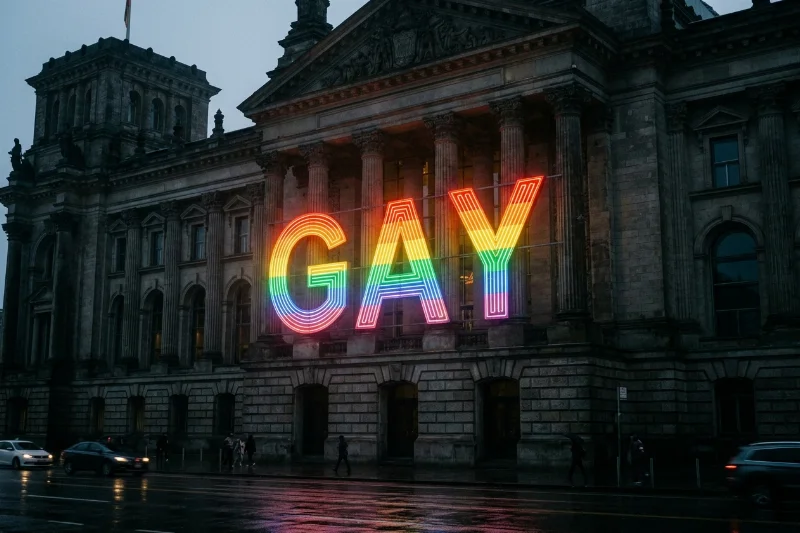
Language is a living entity, evolving through usage, intent, and cultural context. For decades, the word “gay” has transitioned from a descriptor of joy to a clinical term for sexual orientation, and finally, to a badge of pride for a global community. Yet, in specific political corridors, the word still carries a weight that feels more like a weapon than a definition.
The Intersection of Identity and Insult
The concept of “gay” as an insult is not new, but its persistence within the modern Republican framework is a curious phenomenon of cognitive dissonance. While the rest of the world increasingly views sexual orientation as a neutral characteristic, a segment of the American right wing still treats the term as a moral failing or a social contamination. This shift in perception turns a simple adjective into a perceived slur.
To understand why being called “gay” feels like an attack to some, we must look at the historical usage of the term in conservative rhetoric. For years, the GOP has positioned traditional family values as the antithesis of LGBTQ+ identities. In this binary worldview, anything outside the heteronormative “norm” is viewed as a deviation, making the label itself a mark of the “other.”
When a political group spends decades legislating against a specific identity, that identity naturally becomes synonymous with opposition. To a Republican lawmaker who views queer rights as a threat to societal fabric, the word “gay” represents a challenge to their authority and worldview. It is here that the word stops being a self-identifier and starts being a point of contention.
The Rhetorical Shift in Conservatism
Modern conservative discourse often utilizes “gay” as a shorthand for “liberal” or “woke.” This conflation is intentional, designed to alienate the LGBTQ+ community from the broader American identity. By framing the word as a political stance rather than a human reality, it becomes easier to dismiss the concerns of queer individuals as mere partisan bickering.
The irony is that many LGBTQ+ people have spent their lives reclaiming the word, turning it into a source of strength and solidarity. We see this in the pride parades, the art, and the literature that celebrate gay life. However, when this word enters the echo chambers of far-right media, it is stripped of its celebratory context and re-dressed as a threat to children or traditional values.
This weaponization of identity is a tactic used to maintain a rigid social hierarchy. If “gay” can be maintained as a slur-adjacent term, it keeps the community on the defensive. It forces individuals to constantly justify their existence rather than participating equally in the democratic process, which is exactly the goal of exclusionary politics.
The Psychological Impact of Political Branding
The psychological toll of having one’s identity used as a political football cannot be overstated. When a major political party treats your existence as a negative attribute, it reinforces a culture of shame. This is particularly damaging to young LGBTQ+ individuals who are still forming their sense of self in a world that often feels hostile.
Furthermore, this dynamic creates a difficult environment for conservative LGBTQ+ individuals. Log Cabin Republicans and other queer conservatives often find themselves in the crosshairs of their own party’s rhetoric. They are forced to navigate a space where their identity is often used as a punchline or a signifier of ideological betrayal by their peers.
The resistance to the word “gay” in these circles is less about the word itself and more about the cultural shift it represents. The visibility of the LGBTQ+ community is a reminder of a changing America—one that is more inclusive and diverse. For those clinging to a nostalgia-tinted past, this visibility is interpreted as an assault on their way of life.
Reclaiming the Narrative and the Future
Breaking the cycle of using “gay” as a pejorative requires a fundamental shift in how we engage with political identity. It involves challenging the notion that one’s sexual orientation is a partisan issue. Until the GOP can reconcile its platform with the reality of LGBTQ+ existence, the word will continue to be used as a divider rather than a descriptor.
True progress happens when we stop allowing political gatekeepers to define the value of our identities. The word “gay” belongs to the people who live it, not the politicians who fear it. By continuing to use the term with pride and clarity, the community renders the intended “slur” toothless and restores its original power of self-definition.
As we look toward the future, the goal is a political landscape where a person’s orientation is as unremarkable as their eye color. This requires a dismantling of the rhetorical scaffolds that prop up identity-based attacks. Only when the word “gay” is stripped of its manufactured political baggage can it fully return to its rightful place as a simple fact of human diversity.
In conclusion, the tension surrounding the word “gay” within the Republican party is a symptom of a larger struggle for the soul of the country. It is a battle between inclusion and exclusion, between the future and the past. Until the word is no longer seen as a threat, the work of true equality remains unfinished, and the conversation must continue with unapologetic honesty.